The Manifesto: The Origin
It is the origin and guiding axis of everything.
It represents the vision, values, and shared principles of those involved. It defines the common purpose, the curatorial criteria, and the ethical and aesthetic line of the works. The Movement functions as a cultural and creative engine that guides the decisions of the production company, and in turn, its productions. This is not a closed manifesto: it is alive. We know that the only constant in the universe is change. The Movement is dynamic and will have its own cycles and manifestations.
The Manifesto of The Elemental Cinema
Elemental Cinema is born from the will to make living cinema that honours its own nature. Elemental because it is simple, not in the sense of lightness, but in the sense of stripping away the superfluous.
Cinema must return to its essence. To the storytellers who once gathered around the fire to speak of what matters. To the myths that make us dream. To the mirrors that help us see who we are and who we wanted to be.
Elemental Cinema is not a theory. It is a movement of creation and action. What matters is not the intention but the film
The Principles
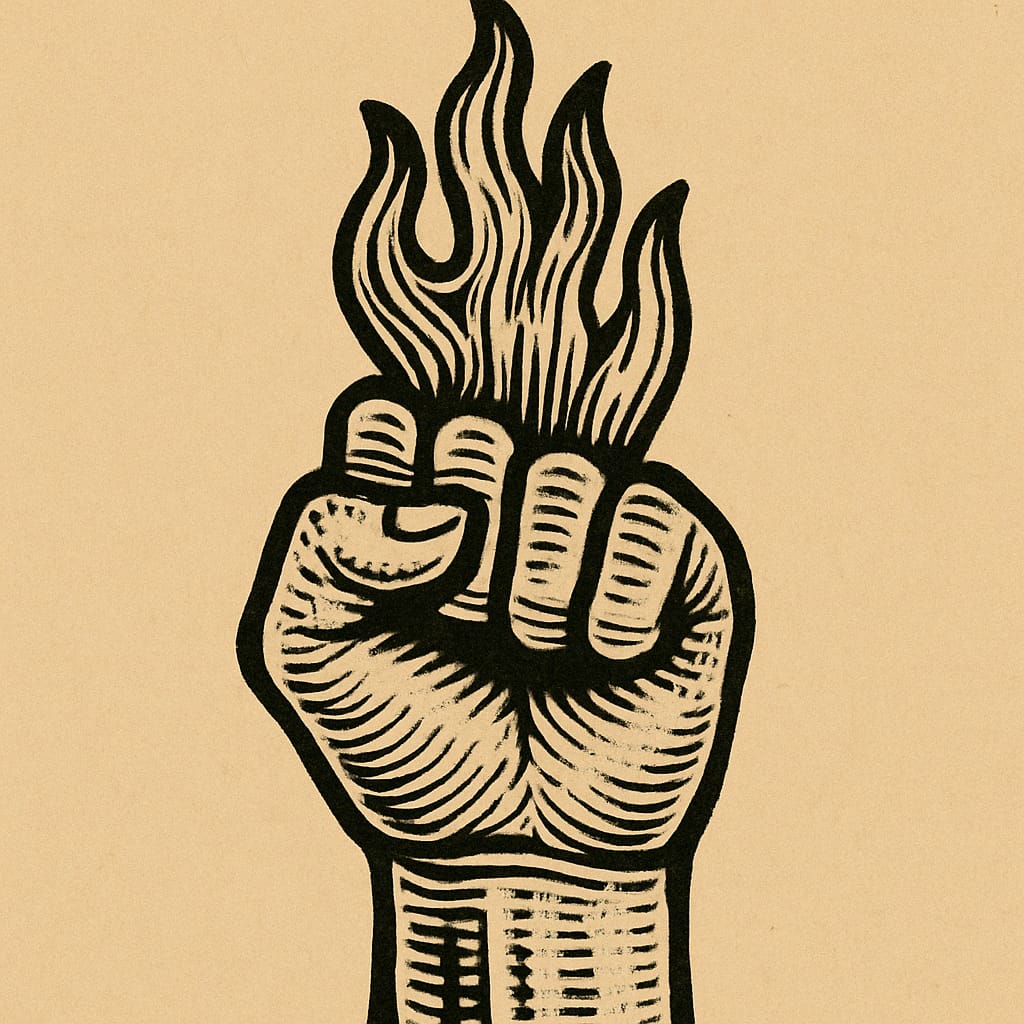
Frame of Action
The Mechanical Act
First Principle
Fire was feared before it was tamed. Technology is not a threat. What matters is not the tool but who uses it.
Second Principle
Talent is distributed at random. Power and opportunities are not not. The people who decide what gets made are not always the ones who know what should be made.
Third Principle
Too many resources create complacency and intellectual gentrification. Scarcity is the weapon of the entrepreneur and the creator. Urgent cinema finds its strength there. We do not ask for permission. We do not wait for grants. We act with what we have when what we have is enough to spark the flame. As in the entrepreneurial world, those who have talent and act have opportunity, but also responsibility. Every gesture invested, every effort made, is measured by what it helps grow. The return does not come from favours or schemes. It comes from the real merit of those who create, deliver and build. The essential must not wait for the ideal. Art made in truth does not bow to demands and does not submit to the tastes of committees, festivals or markets. If a film can wait for funding, perhaps it should not exist. If it can exist with fewer resources and those are the resources available, then it should exist. This is not a vicious cycle of dependence. It is a movement that believes cinema is made with ideas and talent, not with institutional handouts.
Forth Principle
The White Box is a foundation that accepts no shadows. It believes in transparency as a form of justice. There are no forgotten hours floating in the ether. In the White Box, every hour is recorded. Every contribution has a face, a weight and a consequence. No one gives without knowing what they are helping build. No one builds without knowing what they will receive. What is given is recognised. What is promised is honoured. Justice is not a favour. It is the straight line between a gesture and its result. What is built, is built with clarity, responsibility and a real sharing of both risk and gain.
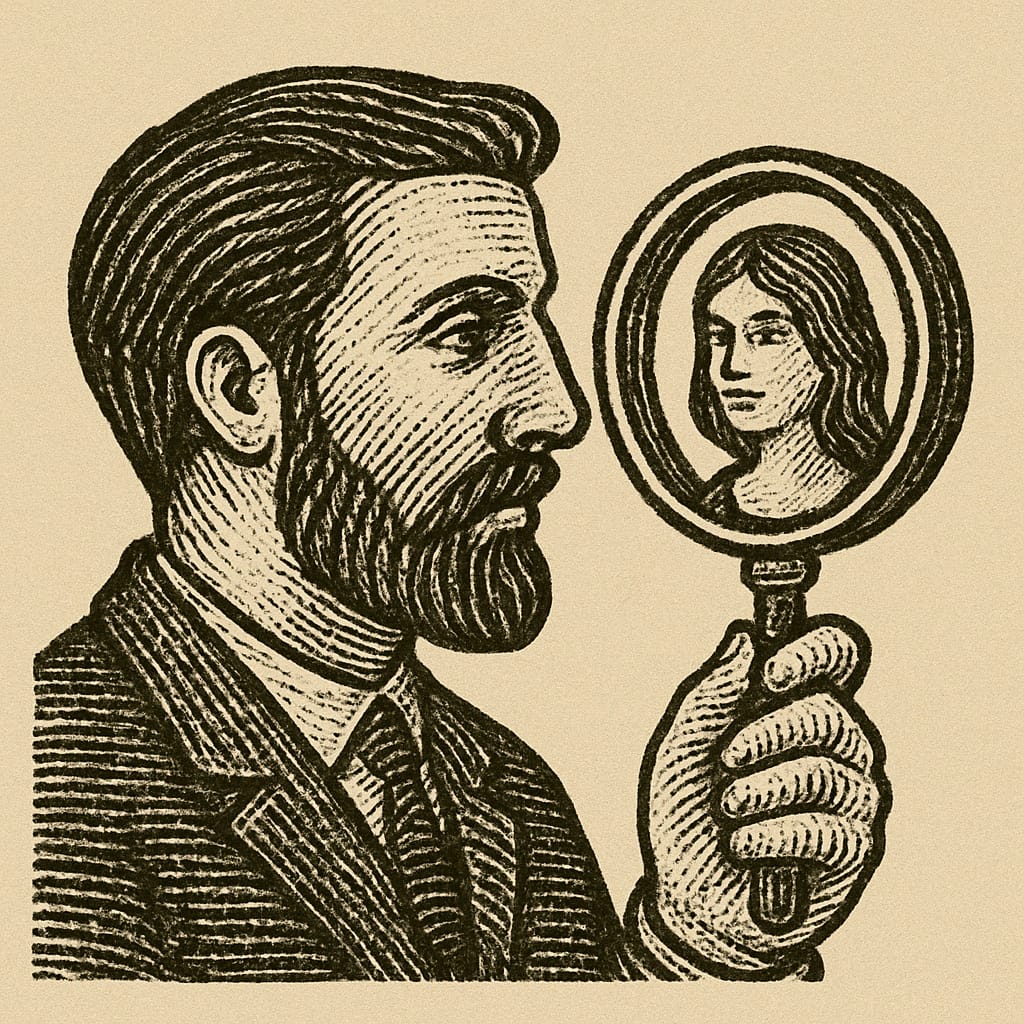
Living Truth
The Substantive Act
Forth Principle
Art will never defeat time. Its seed might.
Fifth Principle
Art cannot be internal or external alone. It must be the collision of both universes. The interior may be gold, but only outside does it shine. The inner world holds all the richness, the kindness, the violence, the silence, the contradiction, but without the collision with the outer world, it does not manifest. Neither matters unless they meet.
Sixth Principle
Art does not have to be social. It must be human. The history of societies may be the history of class struggle, but the history of humanity is the search for meaning. And that search contains everything. The tragedy of love is no less than that of civil war. We can die of heartbreak just as we can on the battlefield with our entrails exposed.
Seventh Principle
Follow electricity, not intellect. We do not cling to the first idea. We let an almost-good idea die in peace, because we know the true one will come roaring. The living idea, the one that stirs and seizes us, will arrive at the right time.
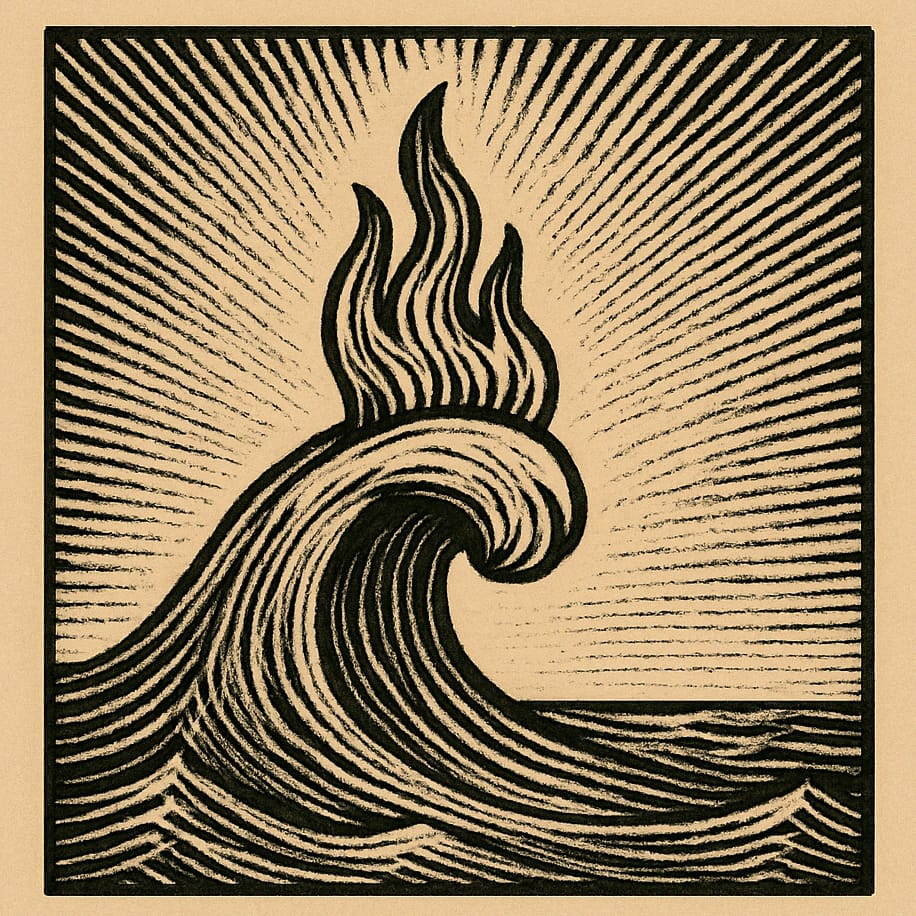
The Ocean Current
The Aesthetic Act
Ninth Principle
A film contains literature, painting, theatre, music, but cinema is living art and must say something that cannot be said in any other way.
Tenth Principle
Those who have nothing to say, shout, or worse, use silence hoping it will seem profound. A film cannot stand on its aesthetics alone. Style without truth and without a living idea is an empty trick.
Eleventh Principle
Neither popcorn nor foie gras. Our cinema belongs to neither extreme. On one side, entertainment. On the other, a closed circle of intellectuals talking to their own, mistaking pretension for depth. We will not be peacocks parading for peacocks. We do not make films for our peers, nor do we make them to please an audience. We make them because they are our living truth.
Twelfth Principle
Art does not knock. Art is urgent because it is survival. It exists because it must. If it does not, we die. It holds no aesthetic trend or school of thought. It holds ocean currents.
Foundations and Frontiers
The Principles Expanded
Frame of Action
The Mechanical Act Expanded
Fire was feared before it was tamed.
Technology is not a threat. It is not the tool that matters, but the hand that uses it.
Fellini explored sound and colour to expand his dreamlike vision. Coppola reinvented cinematography with the Steadicam and digital capture. Ozu used innovative lenses to craft frames that redefined the language of cinema. Murnau freed the image from theatrical rigidity by moving the camera like never before.
Artificial intelligence is no different. Like any revolutionary tool, it brings both fear and possibility. The mistake is not in using it, but in submitting to it. Letting it replace creative thought instead of amplifying it. If used with ingenuity, reverence and humility, it becomes just another extension of human creative power.
Like any other tool or stylistic resource, it must be used with intention and purpose. Not as an end in itself. Its value lies not in novelty or immediate impact, but in how it serves the story and expands expression. When the tool becomes the centre rather than the means, the essential is lost. It is up to the creator to decide how to use it, without fear, without subservience, with awareness.
Technology is only a means. The true challenge of cinema lies not just in how we film, but in who has the possibility to film.
There are films whose nature requires substantial means to fully become what they are. Through their scale, their visual language, the world they construct. But many others, perhaps the majority, do not depend on abundance to be true.
If the living truth of the work is present. If there is an urgent idea. If there is substance. Then that film already exists in potential, even with few resources. It might benefit from more, but it does not require them to be cinema. And if it can be made now, with what is available, it should be. The living idea should not be postponed for the sake of an idealised version. The present moment is also a medium.
To film now, with what exists, is part of the path. The next work, with more resources, may come later, but only if this first step is taken. Waiting indefinitely for perfect conditions is a denial of the urgency of creation. Elemental cinema believes that what is essential asserts itself, and that necessity is the cradle of the most authentic expression.
Talent is distributed by chance, but power is not. Some people are born with the gift of storytelling, others are not. This follows no geographic, social or economic logic. But opportunity works differently. It is concentrated in centres of economic, artistic and political power, where access is restricted. In larger and more dynamic markets, the likelihood of talent intersecting with decision-making is greater. But some systems are more meritocratic than others. In closed circuits such as Portuguese cinema, the risk is higher. Fewer projects, less investment, less margin for genuine talent to reach positions of decision. The result is often work that is impeccable in execution, but without a living idea. The technique is in the right hands, but the ideas are not.
This also happens because the production model has become a game of safety. Producers and studios have abandoned the development processes that once supported a more dynamic creative ecosystem. They used to buy a script, then choose a director, and only afterwards define the cast. Now they only invest in fully packaged projects, with everything guaranteed from the outset. This reduces risk, but it also limits innovation and diversity. Creators play it safe, avoiding bold moves that might compromise careers or investment. But without risk, there is no truth. Cinema must once again become a space of experimentation, of betting on ideas, of accepting greater risk.
This fear of risk arises from a fundamental misunderstanding. The belief that more money automatically leads to better cinema. An excess of resources breeds complacency and intellectual laziness. Scarcity, when well channelled, is the creator’s sharpest weapon.
The history of cinema shows us that great revolutions are born of need. The Nouvelle Vague did not emerge from million-pound budgets. Italian Neorealism rose from economic ruin. Dogma 95 imposed restrictions to liberate the truth. When everything is guaranteed, when the risk is minimal, films become safe, repetitive, bureaucratic.
Mumblecore was one of the most striking contemporary examples of this principle. Without institutional support or robust budgets, filmmakers like Andrew Bujalski and the Duplass brothers began filming with what they had. Personal savings, credit cards, friends as actors, affordable digital cameras. They filmed in their own homes, shared equipment and crews, and found festivals like SXSW to give visibility to their cinema. These films showed that you do not need a large budget to create something authentic. Scarcity is not an obstacle. It is a catalyst. When every choice carries weight, when every scene must justify its existence, cinema gains intention, force and truth.
This is not about romanticising precarity. It is about recognising that art is not born from ease, but from necessity. A film does not need millions. It needs an unavoidable reason to exist. Urgency is a state of spirit, not a stylistic effect. Free cinema is born because it must be born. Not because someone decided it was the right time. It does not ask permission. It does not follow trends. It does not submit to external rules. Creative freedom is not about having every option available, but about knowing that no one is dictating what can or cannot be done.
Elemental cinema does not wait.
Interlude
Why We Separate Aesthetic and Substantive Acts?
Beyond Aesthetic Originality: Rethinking the Value of Art and the Creative Process
Art is often judged through a binary lens, where aesthetic originality becomes the main measure distinguishing a relevant artist from a mere imitator. If an artist’s style resembles that of their predecessors, their work is frequently dismissed, regardless of its emotional, intellectual, or cultural depth. This approach is reductive and fails to recognise that art manifests across multiple dimensions, aesthetic being only one of them, and originality within aesthetics being just a subset of a work’s value.
Art Exists in Two Fundamental Dimensions
Artistic greatness does not depend solely on formal originality. Art lives in two complementary dimensions.
Substance emerges from the fusion of emotional and intellectual depth, the inner truth of the artist combined with their structured thinking. Aesthetics, on the other hand, derives from form, style, and sensory experience, balancing sensory perception with intellectual construction. One does not cancel out the other, and many extraordinary works did not revolutionise aesthetics but became vital because of what they expressed.
The Creative Process: Nothing Is Ever Truly New
Artistic creation happens on two levels, one instinctive, linked to substance, the other cognitive, where aesthetics and structure are consciously built.
The creative process moves between divergent thinking, which expands possibilities, and convergent thinking, which narrows and structures them.
No creation arises from nothing. Absolute originality is a myth. Every work is born from the fusion of references, from the human ability to identify patterns, combine them, and apply them in unexpected ways. At the base of this expansive movement is always memory. In this universe, everything new is in truth a more or less unexpected fusion of something that already existed.
The Error of Judging Art Solely by Formal Innovation
Art history shows that great contributions have not always come from stylistic ruptures, but often from new ways of exploring universal themes. Works that recycle or reinterpret previous languages can be just as impactful as those that invent new styles.
Aesthetic originality alone does not guarantee depth. Often, formal innovation merely masks the absence of meaningful content. Great artists did not always revolutionise artistic language, but marked history by what they communicated. The substance of a work can exist without formal innovation, because its real impact lies not in appearance but in the truth it carries.
Philosophy and Art on the Question of Formal Innovation
Since antiquity, the relationship between form and content has been one of the great debates in art. Plato warned against empty aesthetic seduction, insisting art must serve a higher purpose. Aristotle, in contrast, saw form as a vehicle of emotion and experience. Hegel understood artistic evolution as a reflection of the spirit of the times, more than a quest for originality itself. Walter Benjamin criticised the obsession with authenticity, arguing that repetition and reproduction do not negate artistic meaning. Harold Bloom demystified creativity as something wholly novel, showing that all artists are in constant dialogue with the past.
Therefore
Art must be evaluated by its ability to provoke, move, and transform. Its relevance lies not only in formal innovation but in the resonance it establishes with audiences and society. Aesthetic originality is a means, not an end. What truly matters is the substance and impact of the work, they are what define its value.
Aesthetics must always serve the narrative and meaning, never exist as an empty gimmick.
Aesthetic originality has value, but it must never be the sole measure of artistic worth.
The real merit of art lies in its ability to communicate something essential, profound, and true.
The impact of a work also lies in its universality, in the echo it awakens in others, not merely in its formal novelty.
Creation is not a purely rational act, nor a random spark of luck. It is the fusion between intuition and construction, between substance and form, between what rises from the soul and what is shaped by the intellect.
The Living Truth
The Substantive Act Expanded
Art will never overcome time, but the seed might. Time buries almost everything, and cinema is no exception. Films that try to be modern age quickly. Those that follow trends become obsolete even before they are released. But there is something that withstands time: the seed, the living idea that continues to germinate, the essential truth that remains relevant. A film may vanish, but if it touched someone, if it planted an idea, if it changed the way someone sees the world, then it survives. Elemental cinema is not made for hype, it is not designed for the present moment, but to be lived and to leave behind a seed that takes root.
Cinema is born from the collision between what we carry within and what we encounter outside. Art cannot be purely internal or external. The inner world is where the spark begins: the intuition, the idea, the obsession that makes a film come into being. But creation cannot be a solitary act, closed in on itself. The outer world is the raw material, but it is inside that gold is forged and that gold is not seen unless it comes into the light. There is value only when that inner richness finds resonance in others. Cinema needs that confrontation with reality, with limits, with the spectator’s gaze. Feeling is not enough, it must be expressed.
Cinema does not come from reason, it comes from the spark. Creating is a tension between impulse and maturation. The craft of the bureaucrats of creation, the hesitant labourers of repetition, is to cling to the first functional idea, polishing it to exhaustion, turning a promising glimmer into an object without pulse or spark. The mistake of the insecure is never moving forward, always waiting for the perfect moment that never comes. The living idea does not need to be pulled, it pulls us with it. If it does not, it is not its time. The true creator is not afraid to let an almost-good idea die peacefully. The space left by a discarded idea makes way for something greater. The true idea arrives forcefully, unrelentingly, impossible to ignore. And when it arrives, there is no doubt.
The belief persists that the relevance of art depends on being inscribed within a social or political discourse, as if only what has explicit political dimension deserves to be recognised. But art does not need to be social, it needs to be human. The history of societies may be the history of class struggle, but the history of humanity is the search for meaning. And that search contains everything. The tragedy of love is no lesser than that of civil war. One can die from love just as one can die in battle with one’s guts exposed. The intimate can be violent, the small can be devastating, the banal can contain the infinite. The error is not in filming the everyday, but in treating it as insignificant. A look filled with resentment can be as brutal as an execution. The silence between two people can weigh more than a bombardment. It is not the subject that defines a film’s power, but how it moves us. Art does not need to justify its existence with an external purpose, because when it is truthful, it carries all the universality it needs within itself.
On politics, and that modern need to make everything into everything, until nothing is anything. On social anthropocentrism, faltering under its own limits.
There are realities that precede any human construction. It is true that living in society involves order, sharing, an adjustment of gestures and meanings that inevitably touches the political. Even before formal assemblies, organised armies, or theories of coexistence, there was already a diffuse form of politics, the need to assign places, distribute roles, manage forces. This primary politics accompanies the very experience of being in the world with others. In this sense it is acceptable to say that many human manifestations contain a political dimension, even if faint.
But perhaps we can ask: is there not a more elemental level, before order, before the rule of law and the tacit pact, a level where existence is not yet social or political? And if, before any social or communal structure, there were already fear, pain, hunger, sex, the instinct to protect, the need for shelter, the urge to perpetuate DNA, without calculation, without rationalisation, without the burden of social grammar?
When I say that art does not need to be social, that art needs to be human, I am not denying the communal dimension of life. I recognise it. But I also recall that its deepest root does not arise from sharing, it arises from the very condition of existing. Humanity contains everything. It holds gesture and tragedy, hunger and celebration, exile and creation. It does not require politics as a licence to exist.
What does not make sense is turning a historical necessity into a universal principle. Is everything political? Everything is also biochemical. Everything is mathematics. Everything can be Freudian psychoanalysis, given enough ingenuity. From the expansion of one part until it occupies the whole, thought can no longer breathe, we are left with a single idea echoing in its own chamber. It becomes a weak syllogism: there are power relations in everything, therefore everything is political. In the same conceptual tone, we could say everything is football if we accept that all human relations involve strategy, tactics, knowledge, interpersonal dynamics, competition and theatre. In this logic, a misanthropic hermit who withdraws from society is like a striker who believes everything needed already exists within him. He distances himself from the team as he distances himself from society, convinced that the value he seeks cannot be built collectively, but already lives within him, whole. Therefore, in this notion, not only could everything be football, but football would also be political.
The problem is not just a flaw in reasoning. It is what that flaw does to words. Conceptual hypertrophy: we stretch meaning so far that it dissolves, loses nerve, loses its ability to name what is different. If everything is politics, then politics ceases to be anything at all.
It is understandable that in the twentieth century it became necessary to see politics in everything. Philosophy itself, wounded by the rupture of the Industrial Revolution and the sudden shift from monarchic rule to uncertain democratic experiments, was already dragged into the urgency of exposing power even in the most invisible structures. A society clumsily seeking reinvention amid industrial rise and the fragile promise of democracy. Foucault revealed the invisible mechanisms of power. Rancière reconfigured the field of the sensible. It was necessary. It was urgent. In a century of censorships and concentration camps, seeing politics as an infiltration of power into all forms of expression made sense. It was meaningful. It served its purpose.
And yes, throughout history, art and politics have often touched, sometimes healthily, sometimes promiscuously. It is not rare for the artist to want to intervene in the social realm, to use their work as a tool of denunciation or transformation. Nor is it rare for power to recognise in art, and in culture as a whole, a force capable of shaping the collective unconscious, of taming rebellion, of instating convenient mythologies. Herbert Marcuse noted that culture can be absorbed by the system it seeks to challenge. And long before him, Baron de Montesquieu wrote, “Almost all monarchies were founded in ignorance of the arts and destroyed because they cultivated them too much.” But these circumstantial approximations, these mutual contaminations, do not define the essence of creation. Art can be political. It can be used by politics. But its deepest origin escapes all forms of utilitarianism. It remains untamed, prior to order, prior to purpose.
Even so, for centuries, philosophy, aesthetics and artistic experience maintained a clear distinction between the space of art and the space of politics. For Plato, Aristotle, Augustine, Kant, Schopenhauer or Nietzsche, art was not an extension of civil society nor a tool of public order or social change. It was an autonomous experience, rooted in emotion, contemplation, contact with the sublime or the intimate struggle against the blind will of existence. For them, art was an expression of the human condition that precedes and transcends any need for political organisation. The risk of dissolving this distinction is not merely conceptual, it is existential.
Words, fragile as they are, exist precisely to distinguish concepts. To say: this is love. That is power. This pain is mine. That violence belongs to the world. When we dissolve everything into an undifferentiated soup, a primordial broth, we are not seeing more, we are seeing less.
Let us look then and step beyond the contemporary trench. We will find civilisations and communities where life was not structured by politics but by myth, by ritual, by dancing around the fire. It was not about rule of law, nor about universal suffrage, nor about subtle forms of power and regulation. It was about remaining, about finding meaning, about preserving DNA, about surviving death, about conquering time. An existential struggle, the search for meaning.
Politics organises the space between people. Art organises the space within a person. Where politics regulates, art expands. Where politics imposes boundaries, art opens. And it is in that hidden interval, in that misalignment between what is needed to coexist and what is needed to remain alive within, that the territory of creation rises and expands, wild and untamed. Even today, lost in anxious democracies and sophisticated dictatorships, there are still spaces that elude the rigid grammar of a worldview where everything is political: a glance without calculation, a grief carried in silence, a poem written with no recipient.
This impulse to continue, this blind hunger to endure, is not merely metaphorical. It is verifiable in the molecular grammar we carry, in the biochemical impulses that move every cell before consciousness and before culture. From this biochemical mode arises the idea at the heart of deep existentialism, an idea that precedes any choice or freedom. It is not an intellectual gesture. It is a programme written into the flesh, an urgency printed in the blood, a silent pact inherited by every living being before it even learns its name: every form of life is programmed to preserve its DNA.
Art is born from these places. It can be political if it chooses. It can be militant, accusatory, combative. But it does not have to be. Art is human, and humanity does not need political legitimacy to exist.
The Ocean Current
The Aesthetic Act Expanded
Cinema is the art of the elements, but it cannot be merely a collage of them. A film may contain literature, painting, theatre and music, but cinema is living art and must express something that cannot be conveyed in any other way. If a film could exist in another form without losing anything essential, then it is not living cinema. When it is truly alive, what it transmits could not be felt through any other medium, anything else would be incomplete.
But inevitability is not earned through sleight of hand. Too many filmmakers confuse minimalism with depth, believing that the absence of words automatically creates emotional density. Cinema is rich with powerful stylistic tools. Silence, rhythm, contrast, intensity, yet any of these, when overused, lose their impact and become empty artifices. Silence, for example, can be overwhelming, creating tension, emotion, depth. But if applied indiscriminately, it becomes a purposeless void, an absence of thought disguised as profundity. It is like the calm sea at the eye of a storm, it looks intense, but it does not move. The same is true of intensity itself: the emotional weight of a powerful moment exists only because it is framed by restraint. Freedom of expression in cinema does not mean using the same trick repeatedly, but knowing how to measure each choice, how to use the available tools consciously, without hiding a lack of creativity behind an excess of style. A good storyteller knows that form is at the service of the truth of the narrative. If there is a story to be told, the means arise in the right measure, without force, because each element has a purpose. In the middle of a war, silence is powerful. In the middle of a dull day, it is simply the absence of a living idea pretending to be deep.
The greatest danger for a film is to become a hollow stylistic exercise, created to impress peers rather than to be seen, felt or lived. Many works are born from a competition of references, a validation game between filmmakers, a closed ritual where only the initiated understand the code. Creating for festivals, for status, to secure a place within a specific scene, is a betrayal of truth.
But the opposite does not serve us either: we do not shape films for algorithms, nor do we follow pre-set formulas to please the market. Making films for algorithms is like cooking for a temperature sensor, whether the flavour is present or not matters little, only the mechanical response is considered. Elemental cinema rejects both extremes. We do not create to impress nor to seduce, we create because there is something that needs to be said, something that seizes us and therefore may reach others. If it is real, it will find its way.
Cinema does not need to choose between being disposable or inaccessible. The error of contemporary cinema lies in this false dichotomy: either pure entertainment or something hermetic for a niche. But true cinema has never existed at the extremes. A great film can be accessible without being shallow, intense without being elitist. Elemental cinema refuses to be trapped by pre-defined categories. It happens wherever truth exists, wherever there is an idea worth telling, unconcerned with labels or classifications. Cinema should not be pretentious. We must learn humility and dignity. What is true will always sound familiar, because truth does not need to be explained, it reveals itself, and in doing so, it resonates. In the same way, cinema is not something to be thought through, it is something to be felt, in the skin, the bones and the soul. It is not an essay and should be lived more than thought through with instructions or intellectual presumption.
Cinema is not a dry, self-important experience for intellectuals, nor is it a recursive repetition of ideas and references to references. The kind of cinema that loses itself in lifeless style exercises or empty academicism becomes a closed ritual, appreciated only by those who already know the code. When creation becomes an internal game of validation, when cinema folds in on itself and forgets humanity, it stops being cinema and becomes a museum of dead images, beautiful or not, of a cinema that never truly had a soul. Real complexity is not measured by opacity, but by how deeply it touches the human.
True art does not ask permission, it does not wait for the right moment, nor does it submit to trends or markets. It is born from urgency, from the inescapable need to exist. If a film can be postponed indefinitely without anything being lost, perhaps it never needed to be made at all. Elemental cinema does not fit within bureaucratic calendars or institutional approval cycles. It happens because it must.
Creation does not follow schools of thought or aesthetic doctrines. There are no dogmas, no orthodoxies to obey. It does not contain aesthetic trends or schools of thought, it contains ocean currents, unpredictable, inevitable, alive. The wind does not ask for permission to blow, and it only moves what is ready to set sail. The cinema that endures is not the one that fits in, but the one that asserts itself. The one born from real urgency, from the need to tell something that, if left untold, would choke us.
True art does not wait for an invitation. It does not knock on the door. It passes through and enters.